WASSCE Government · The Judiciary
The judiciary: functions and independence
By the WASSCE Tutor team
Updated 12 November 2026 · 7 min read · Prepared against the WASSCE syllabus.
When a trader in Bo is cheated in a contract, when the police charge a suspect with theft, or when a citizen claims that a government action breaks the Constitution, the dispute ends up before a judge. The judiciary is the arm of government that settles disputes and says what the law means. It can only do this fairly if judges are free from pressure. This lesson explains the functions of the judiciary and how its independence is protected.
Learning objectives
By the end of this lesson you should be able to:
- define the judiciary
- explain the functions of the judiciary
- explain judicial independence and why it matters
- state the safeguards of judicial independence
- identify the factors that threaten judicial independence
What is the judiciary?
The judiciary is the arm of government that interprets and applies the law, settles disputes between individuals, groups and the state, and punishes those who break the law. It is made up of the judges, magistrates and other judicial officers and the courts in which they sit.
Functions of the judiciary
- Interpreting the law and the constitution: saying what a law means when it is unclear.
- Settling disputes between individuals, between individuals and the government, and between organs of government.
- Trying and punishing offenders in criminal cases.
- Protecting fundamental human rights, for example by ordering the release of a person unlawfully detained.
- Judicial review: declaring laws or executive actions null and void if they conflict with the constitution.
- Making case law (judicial precedent): decisions of higher courts guide lower courts in similar cases.
- Guarding the constitution and the rule of law.
- Swearing in the President and other officials (the Chief Justice administers the oath).
- Hearing election petitions that challenge election results.
- Conducting judicial inquiries and serving on commissions when asked.
Judicial independence
Judicial independence means that judges decide cases impartially, according to the law and the evidence, without interference or pressure from the executive, the legislature, political parties, the wealthy or anyone else.
Without it, the courts cannot protect citizens against the government, and the rule of law collapses.
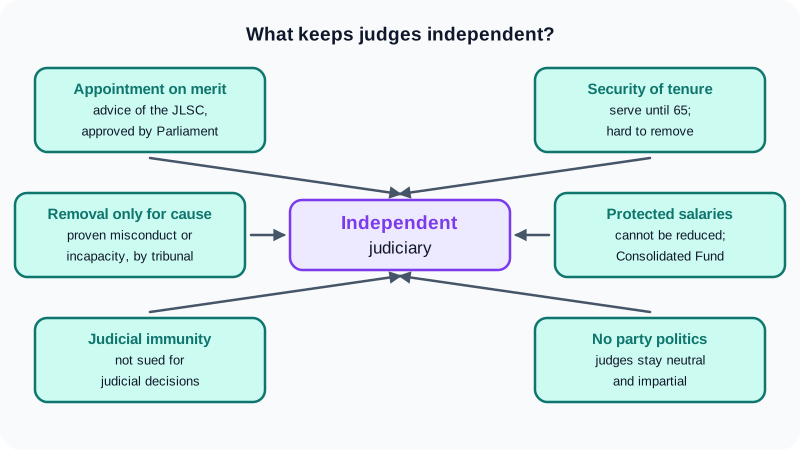
Figure 1. Safeguards of judicial independence. WASSCE Tutor diagram.
Safeguards of judicial independence
| Safeguard | Explanation (Sierra Leone) |
|---|---|
| Method of appointment | Judges are appointed by the President on the advice of the Judicial and Legal Service Commission (JLSC), subject to the approval of Parliament, so no single person chooses them |
| Security of tenure | Judges hold office until a fixed retirement age (65 for superior court judges) and cannot be dismissed at will |
| Difficult removal | Removal only for inability or misconduct, after investigation by a tribunal |
| Protected salaries | Salaries are charged on the Consolidated Fund (no annual vote) and cannot be reduced to a judge's disadvantage |
| Judicial immunity | Judges cannot be sued for decisions made in their judicial capacity |
| Qualifications | Only experienced lawyers of good character are appointed |
| Political neutrality | Judges may not take part in partisan politics |
| Separation of powers | The judiciary is a separate organ under its own chapter of the Constitution |
| Contempt of court | Courts can punish those who disobey or insult them |
Threats to judicial independence
- Executive influence over appointments, promotions and transfers
- Poor pay and conditions, which expose judges to bribery
- Corruption within the justice system
- Political pressure and threats against judges
- Military regimes that set up special tribunals and ignore court orders
- Judges' own political or ethnic bias
- Inadequate funding of the courts, leaving them dependent on the executive
"Explain four ways the independence of the judiciary is ensured." For each point, say what the safeguard is and why it helps:
- Security of tenure: judges cannot be sacked for unpopular rulings, so they can rule against the government.
- Salaries charged on the Consolidated Fund: the executive cannot cut a judge's pay as punishment.
- Appointment through the JLSC with Parliament's approval: stops the President packing the courts with loyalists.
- Judicial immunity: judges need not fear being sued for their decisions.
Sierra Leone's judiciary is set out in Chapter VII of the 1991 Constitution and is headed by the Chief Justice. After the civil war, international partners helped rebuild courts that had been destroyed, and programmes such as the Legal Aid Board (set up under the Legal Aid Act 2012) now help poor citizens get representation, making justice more accessible.
Judicial independence does not mean judges are above the law. Judges must apply the law, can be removed for proven misconduct, and their decisions can be overturned on appeal. Independence means freedom from interference, not freedom from accountability.
Key points
- The judiciary interprets and applies the law, settles disputes and punishes offenders.
- Functions include judicial review, protecting rights, judicial precedent, swearing in officials and hearing election petitions.
- Judicial independence means judges decide impartially without interference.
- Safeguards: JLSC appointment with Parliament's approval, security of tenure (65), difficult removal, salaries on the Consolidated Fund, immunity, neutrality.
- Threats: executive influence, poor pay, corruption, political pressure, military rule.
WASSCE examination focus
Expect to state the functions of the judiciary, to explain judicial independence, and to describe how it is ensured and what threatens it. A common essay asks you to explain "five ways in which the independence of the judiciary can be guaranteed".
Quick check
- What is judicial review?
- Which body advises the President on the appointment of judges in Sierra Leone?
- Why are judges' salaries charged on the Consolidated Fund?
- State two threats to judicial independence.
Answers:
- The power of the courts to declare a law or an executive action null and void if it conflicts with the constitution.
- The Judicial and Legal Service Commission (JLSC).
- So that they are paid without an annual vote and cannot be reduced by the executive or legislature to punish judges.
- Any two: executive influence over appointments and promotions; poor pay; corruption; political pressure or threats; military rule; personal bias; inadequate court funding.
Keep going with the judiciary
This is one of 2 lessons in The Judiciary. Start free with the first lesson of every topic, then unlock them all, plus exam-style practice marked instantly and guided learning tools, from 25 NLe.
- Free account, no card needed
- Everything from 25 NLe
- No automatic renewal
More lessons in The Judiciary
- The court system of Sierra Leone🔒