WASSCE Government · Nationalism and the Road to Independence
Nationalism in Sierra Leone: causes and early movements
By the WASSCE Tutor team
Updated 12 November 2026 · 7 min read · Prepared against the WASSCE syllabus.
In the 1930s a Freetown journalist and trade unionist, I. T. A. Wallace-Johnson, filled his newspaper columns with attacks on colonial injustice and organised workers and young people to demand their rights. He was arrested and detained by the colonial government. Men and women like him built nationalism: the desire of Sierra Leoneans to govern themselves. This lesson explains what nationalism is, why it grew, and the early movements that carried it.
Learning objectives
By the end of this lesson you should be able to:
- define nationalism
- explain the causes of nationalism in Sierra Leone
- describe early nationalist movements and their leaders
- explain the factors that slowed nationalism in Sierra Leone
What is nationalism?
Nationalism is a feeling of loyalty and devotion to one's nation, together with the desire to free it from foreign rule and to govern it themselves. In colonial Africa, nationalism meant the struggle for independence from European rule.
Nationalism in Sierra Leone developed in two broad stages:
- Early (elite) nationalism, from about 1900 to 1945: educated Krio professionals demanded reforms and a share in government, not immediate independence.
- Mass nationalism, after 1945: political parties organised people across the Colony and Protectorate to demand self-government and independence.
Causes of nationalism
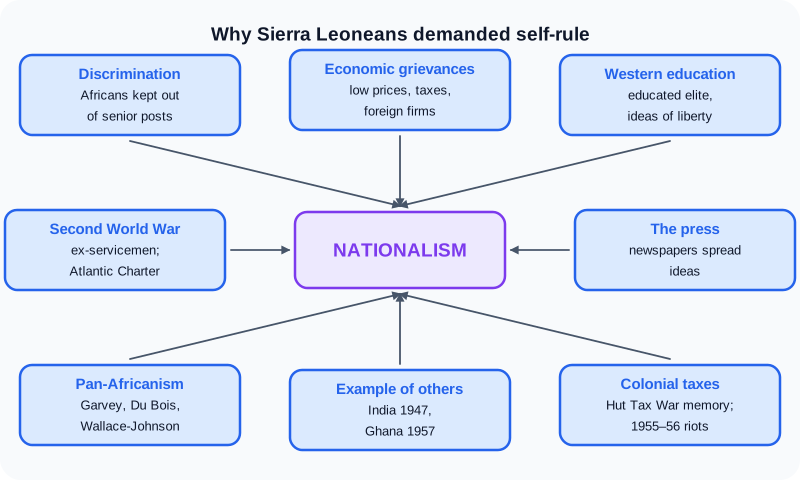
Figure 1. Why Sierra Leoneans demanded self-rule. WASSCE Tutor diagram.
| Cause | Explanation |
|---|---|
| Racial discrimination | Africans, including highly qualified Krio doctors and administrators, were kept out of senior posts, which went to Europeans |
| Economic grievances | Low prices for crops, high prices for imports, domination of trade by European firms, and colonial taxes |
| Western education | Educated Sierra Leoneans learned ideas of liberty, democracy and self-determination; Fourah Bay College produced leaders |
| The Second World War | Sierra Leonean soldiers served abroad, saw Europeans defeated and returned with new ideas; the Atlantic Charter (1941) spoke of the right of peoples to choose their government |
| The press | Newspapers criticised colonial rule and spread nationalist ideas |
| Pan-Africanism | Ideas of African unity and dignity from leaders such as Marcus Garvey and W. E. B. Du Bois, and the Pan-African Congresses |
| Example of other countries | Independence of India (1947) and Ghana (1957) showed that colonial rule could end |
| Colonial taxes and chiefs' abuses | Memories of the Hut Tax War, and anger at taxes and levies in the Protectorate |
| Trade unions | Workers organised and struck for better pay and conditions |
| The United Nations | Its Charter supported self-determination |
Early nationalist movements
| Movement | Founded | Leaders and aims |
|---|---|---|
| National Congress of British West Africa (NCBWA) | 1920 | West African body founded by J. E. Casely Hayford of the Gold Coast; its Sierra Leone section included H. C. Bankole-Bright; demanded elected members in legislatures and more African appointments |
| Protectorate Educational Progressive Union (PEPU) | 1929 | Educated Protectorate people; promoted education and the interests of the Protectorate |
| West African Youth League (Sierra Leone branch) | 1938 | Founded by I. T. A. Wallace-Johnson; organised workers and youth; attacked colonial injustice through its newspaper and trade unions |
| Sierra Leone Organisation Society (SOS) | 1946 | Protectorate leaders including Dr John Karefa-Smart; one of the groups that formed the SLPP |
| People's Party | 1948 | Colony-based group led by the Rev. Lamina Sankoh; also merged into the SLPP |
| National Council of Sierra Leone (NCSL) | 1950 | Colony party led by Bankole-Bright; opposed the 1951 constitution |
| Sierra Leone People's Party (SLPP) | 1951 | Formed by the merger of the SOS, the People's Party and PEPU members; led by Dr Milton Margai |
Factors that slowed nationalism in Sierra Leone
- Colony–Protectorate division: Krio and Protectorate leaders often distrusted each other.
- Indirect rule made chiefs loyal to the colonial government.
- Limited education in the Protectorate until the twentieth century.
- Repressive laws: for example, Wallace-Johnson was detained during the Second World War under emergency regulations.
- Moderate leadership: many early leaders wanted reform within the empire, not immediate independence.
Isaac Theophilus Akunna Wallace-Johnson (1894–1965) was one of West Africa's most radical nationalists. After working in Nigeria and the Gold Coast, he returned to Freetown and in 1938 founded the Sierra Leone branch of the West African Youth League. It organised trade unions and attracted thousands of members. The colonial government saw him as a threat and detained him in 1939. His work helped turn nationalism from an elite affair into a mass movement.
Sierra Leone did not win independence through armed struggle. Its nationalism was constitutional and peaceful: leaders negotiated step-by-step reforms with Britain, and independence was agreed at a conference in London in 1960.
Key points
- Nationalism is the desire of a people to free their nation from foreign rule and govern themselves.
- Causes: discrimination, economic grievances, education, the Second World War, the press, Pan-Africanism, the example of India and Ghana, taxes, trade unions.
- Early movements: NCBWA (1920), PEPU (1929), West African Youth League (1938, Wallace-Johnson), SOS (1946), NCSL (1950), SLPP (1951).
- Slowed by the Colony–Protectorate divide, indirect rule, limited education and repression.
WASSCE examination focus
Expect to define nationalism, to explain the factors that encouraged it in Sierra Leone, and to describe the contributions of nationalist leaders and movements such as Wallace-Johnson and the West African Youth League. Questions may also ask why nationalism in Sierra Leone was slower than in Ghana.
Quick check
- Define nationalism.
- Who founded the Sierra Leone branch of the West African Youth League, and when?
- State three causes of nationalism in Sierra Leone.
- Which groups merged to form the SLPP in 1951?
Answers:
- Loyalty to one's nation together with the desire to free it from foreign rule and govern it themselves.
- I. T. A. Wallace-Johnson, in 1938.
- Any three: racial discrimination; economic grievances; Western education; the Second World War; the press; Pan-Africanism; the example of India and Ghana; colonial taxes; trade unions; the United Nations.
- The Sierra Leone Organisation Society (SOS), the People's Party and members of the Protectorate Educational Progressive Union (PEPU).
Keep going with nationalism and the road to independence
This is one of 2 lessons in Nationalism and the Road to Independence. Start free with the first lesson of every topic, then unlock them all, plus exam-style practice marked instantly and guided learning tools, from 25 NLe.
- Free account, no card needed
- Everything from 25 NLe
- No automatic renewal
More lessons in Nationalism and the Road to Independence
- The road to independence, 1951 to 1961🔒