WASSCE Government · Military Regimes and the Civil War in Sierra Leone
Military rule in Sierra Leone: NRC, NPRC and AFRC
By the WASSCE Tutor team
Updated 12 November 2026 · 7 min read · Prepared against the WASSCE syllabus.
Three times between 1967 and 1997, soldiers seized power in Sierra Leone and ruled by decree. The National Reformation Council (NRC), the National Provisional Ruling Council (NPRC) and the Armed Forces Revolutionary Council (AFRC) each promised to clean up politics. Their records were very different. This lesson explains why the military intervened, how military regimes govern, and what each regime did.
Learning objectives
By the end of this lesson you should be able to:
- explain the causes of military intervention in Sierra Leone
- state the features of military rule
- describe the NRC, NPRC and AFRC regimes
- evaluate the merits and demerits of military rule
Coups and juntas in Sierra Leone
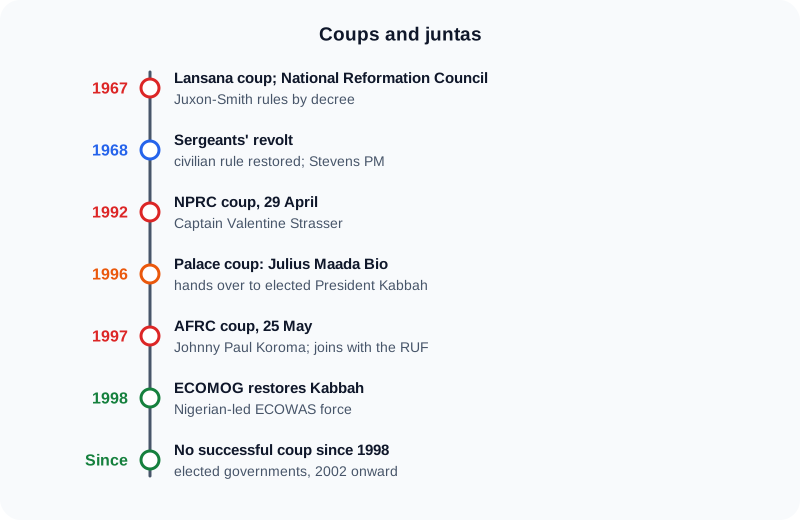
Figure 1. Coups and juntas. WASSCE Tutor diagram.
Causes of military intervention
| Cause | Sierra Leone example |
|---|---|
| Disputed elections | The 1967 election, when the army stopped Siaka Stevens taking office |
| Corruption and mismanagement | The NPRC (1992) blamed the APC's corruption and economic collapse |
| Economic hardship | Unpaid salaries, shortages and inflation in the late 1980s and early 1990s |
| Poor conditions of soldiers | Soldiers fighting the RUF in 1992 lacked pay, food and equipment |
| Politicisation of the army | Recruitment and promotion based on ethnic or party loyalty |
| Ethnic and regional rivalry | Divisions within both the army and politics |
| Personal ambition of officers | Desire for power and wealth |
| Insecurity and war | The civil war gave soldiers political weight |
| Contagion | Successful coups in other West African states |
Features of military rule
- Suspension of the constitution, wholly or in part.
- Dissolution of Parliament and elected councils.
- Rule by decree, issued by a supreme military council.
- Ban on political parties and political activity.
- Fusion of executive and legislative powers in the ruling council.
- Restriction of fundamental rights: detention without trial, curfews, press censorship.
- Special military tribunals.
- Promises of a return to civilian rule after a transition period.
The three military regimes
| Regime | Period | Leader | Key facts |
|---|---|---|---|
| National Reformation Council (NRC) | March 1967 – April 1968 | Lt-Col Andrew Juxon-Smith | Formed after Brigadier Lansana's intervention following the disputed 1967 election; promised to clean up public life; overthrown by the Sergeants' revolt (Anti-Corruption Revolutionary Movement), which restored civilian rule under Siaka Stevens |
| National Provisional Ruling Council (NPRC) | April 1992 – March 1996 | Captain Valentine Strasser; from January 1996 Brigadier Julius Maada Bio | Young officers from the war front overthrew President Momoh on 29 April 1992; struggled to end the war; held consultative Bintumani conferences in 1995–1996; Bio handed power to the elected President Kabbah in 1996 |
| Armed Forces Revolutionary Council (AFRC) | May 1997 – February 1998 | Major Johnny Paul Koroma | Overthrew the elected Kabbah government on 25 May 1997; invited the RUF rebels into government; widespread abuses; isolated by ECOWAS and the UN; removed by ECOMOG in February 1998 |
Merits and demerits of military rule
| Claimed merits | Demerits |
|---|---|
| Can end a political crisis quickly | Unconstitutional and illegitimate |
| May reduce some corruption at first | Abuse of human rights and dictatorship |
| Quick decisions without political debate | No accountability to the people |
| Some regimes hand over power, as in 1968 and 1996 | Soldiers lack experience in governing |
| Corruption often returns or grows | |
| Damages the discipline and professionalism of the army | |
| Coups breed counter-coups | |
| Economic sanctions and international isolation, as under the AFRC |
When Valentine Strasser seized power in 1992, he was only about 25 years old, among the youngest heads of state in the world. The NPRC was popular at first with young people tired of APC rule. But the war worsened, and in 1996 his deputy, Julius Maada Bio, removed him in a palace coup and allowed elections to go ahead. Bio handed over to President Ahmad Tejan Kabbah in March 1996. Twenty-two years later, Bio was himself elected President.
The AFRC and the NPRC are different regimes. The NPRC (1992–1996) overthrew the APC government of Momoh and later handed over to an elected government. The AFRC (1997–1998) overthrew the elected Kabbah government and ruled together with the RUF rebels.
Key points
- Causes: disputed elections, corruption, economic hardship, poor army conditions, politicisation, ambition, war.
- Features: suspended constitution, dissolved Parliament, rule by decree, banned parties, restricted rights.
- NRC (1967–68): Juxon-Smith; ended by the Sergeants' revolt.
- NPRC (1992–96): Strasser, then Bio; handed over to Kabbah.
- AFRC (1997–98): Johnny Paul Koroma with the RUF; removed by ECOMOG.
WASSCE examination focus
Expect to explain the causes of military intervention in Sierra Leone, to state the features of military rule, and to describe the regimes of the NRC, NPRC and AFRC. Essay questions often ask for the merits and demerits of military rule.
Quick check
- Who led the National Reformation Council?
- On what date did the NPRC overthrow President Momoh?
- Which military regime invited the RUF into government?
- State three features of military rule.
Answers:
- Lt-Col Andrew Juxon-Smith.
- 29 April 1992.
- The Armed Forces Revolutionary Council (AFRC), under Johnny Paul Koroma.
- Any three: suspension of the constitution; dissolution of Parliament; rule by decree; ban on political parties; fusion of executive and legislative powers; restriction of rights; military tribunals; promises of return to civilian rule.
Keep going with military regimes and the civil war in sierra leone
This is one of 2 lessons in Military Regimes and the Civil War in Sierra Leone. Start free with the first lesson of every topic, then unlock them all, plus exam-style practice marked instantly and guided learning tools, from 25 NLe.
- Free account, no card needed
- Everything from 25 NLe
- No automatic renewal
More lessons in Military Regimes and the Civil War in Sierra Leone
- The civil war, 1991 to 2002: causes, course and peace-building🔒