WASSCE Government · Local Government and Decentralization
Local government: meaning, types and functions
By the WASSCE Tutor team
Updated 12 November 2026 · 7 min read · Prepared against the WASSCE syllabus.
Who cleans the market in Bo, maintains feeder roads in Koinadugu or collects property rates in Freetown? Not the President or Parliament, but local councils. Local government brings decisions and services closer to the people who use them. This lesson explains what local government is, its types and features, and the structure and functions of local government in Sierra Leone.
Learning objectives
By the end of this lesson you should be able to:
- define local government and state its features
- distinguish local government from field administration
- explain the reasons for local government
- describe the structure of local government in Sierra Leone
- state the functions of local councils
What is local government?
Local government is government at the local level, by elected local councils with legal powers and resources to provide services and make decisions for a defined area such as a district, city or town.
Features of local government:
- A defined area of authority (district, city or municipality).
- Legal existence under an Act of Parliament.
- Elected councillors and leaders.
- Power to raise revenue through local taxes, rates and fees.
- Power to make bye-laws for its area.
- Its own staff and administration.
- Supervision by the central government.
Local government and field administration
| Local government | Field administration (deconcentration) |
|---|---|
| Elected councils with legal powers | Officials of central ministries posted to districts |
| Accountable to local voters | Accountable to the ministry at the centre |
| Raises some of its own revenue | Funded by the central budget |
| Example: Freetown City Council | Example: a District Education Office |
Reasons for local government
- Brings government closer to the people.
- Encourages participation and political education.
- Trains local leaders who may later serve nationally.
- Reduces the workload of the central government.
- Local knowledge: councils understand local needs best.
- Faster delivery of services and development.
- Mobilises local resources for development.
Local government in Sierra Leone
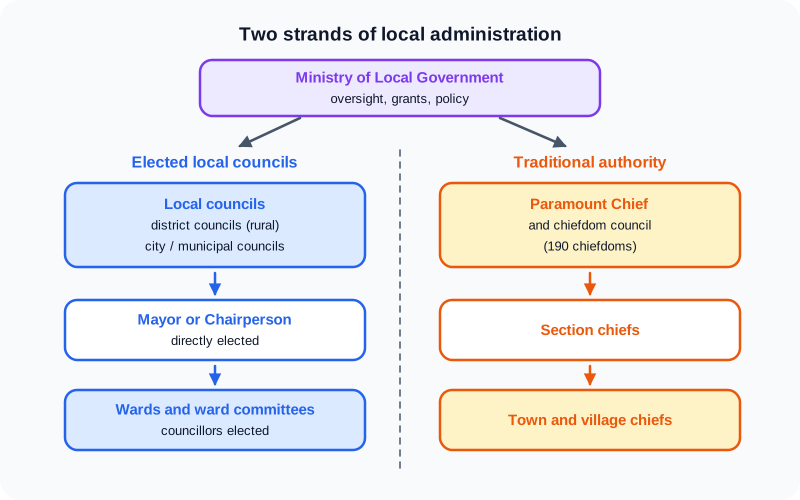
Figure 1. Local administration in Sierra Leone. WASSCE Tutor diagram.
- Local councils, revived by the Local Government Act 2004 after decades of suspension, and now governed by the Local Government Act 2022.
- District councils in rural areas, led by a chairperson.
- City and municipal councils in towns, led by a mayor, for example Freetown City Council.
- Mayors and chairpersons are directly elected by voters; councillors represent wards (elected by district block PR in 2023).
- Each ward has a ward committee that links the council with communities.
- Councils serve a five-year term.
- Alongside the councils, 190 chiefdoms in the provinces are headed by Paramount Chiefs with chiefdom councils, and below them section, town and village chiefs.
- The Ministry of Local Government oversees the system, and grants from central government support council budgets.
Functions of local councils
- Sanitation: refuse collection, markets and public toilets.
- Primary education and primary health care facilities (devolved functions).
- Feeder roads, streets and drainage.
- Water supply in some areas.
- Markets, lorry parks and slaughterhouses.
- Collecting local revenue: rates, licences, market dues.
- Making bye-laws for their areas.
- Development planning for the locality.
- Registration of births and deaths and issuing of trade licences.
- Maintaining recreation grounds, cemeteries and public places.
After the civil war, Sierra Leone made decentralisation part of rebuilding the state. Local councils, abolished in 1972, were restored by the Local Government Act 2004, with the first council elections that year. Functions such as primary health, primary education and agriculture extension were devolved to councils, together with grants to fund them. Today there are 22 local councils across the country.
Local councils and chiefdoms are not the same thing. Councils are elected bodies created by statute; chiefdoms are traditional authorities headed by Paramount Chiefs. In Sierra Leone the two work side by side in the provinces, which sometimes leads to overlapping roles.
Key points
- Local government is government at the local level by elected councils with legal powers and revenue.
- It differs from field administration, where central officials work in the districts.
- Reasons: closeness to people, participation, training leaders, local knowledge, faster services.
- Sierra Leone: Local Government Act 2004 (revived councils), now the 2022 Act; district and city/municipal councils; 22 councils; directly elected mayors and chairpersons; 190 chiefdoms.
- Functions: sanitation, primary health and education, feeder roads, markets, revenue, bye-laws, planning.
WASSCE examination focus
Expect to define local government, to state its features and reasons for it, to list the functions of local councils, and to describe local government in Sierra Leone. Questions often ask about the relationship between local councils and traditional authorities.
Quick check
- Define local government.
- Which Act revived local councils in Sierra Leone after the civil war?
- Who heads a city council? Who heads a district council?
- State three functions of local councils.
Answers:
- Government at the local level by elected councils that have legal powers and resources to provide services and make decisions for a defined area.
- The Local Government Act 2004 (now replaced by the Local Government Act 2022).
- A mayor heads a city council; a chairperson heads a district council.
- Any three: sanitation; primary education and health facilities; feeder roads and drainage; water supply; markets and lorry parks; revenue collection; bye-laws; development planning; registration of births and deaths; licences; maintaining public places.
Keep going with local government and decentralization
This is one of 2 lessons in Local Government and Decentralization. Start free with the first lesson of every topic, then unlock them all, plus exam-style practice marked instantly and guided learning tools, from 25 NLe.
- Free account, no card needed
- Everything from 25 NLe
- No automatic renewal
More lessons in Local Government and Decentralization
- Centralisation, decentralisation and local government finance🔒