WASSCE Government · British Colonial Administration in Sierra Leone
The Colony and the Protectorate: British rule in Sierra Leone
By the WASSCE Tutor team
Updated 12 November 2026 · 7 min read · Prepared against the WASSCE syllabus.
Freetown was founded as a home for freed Black people: the "Black Poor" from London, Nova Scotian settlers who had fought for Britain in the American War of Independence, Jamaican Maroons, and tens of thousands of Africans freed from slave ships. Over the nineteenth century this settlement became a British Colony, and in 1896 Britain declared a Protectorate over the vast hinterland. This lesson explains how Sierra Leone came under British rule and how the Colony and the Protectorate were governed differently.
Learning objectives
By the end of this lesson you should be able to:
- outline the founding of Freetown and the creation of the Colony
- explain who the Liberated Africans were and how Krio society developed
- explain why and how the Protectorate was declared in 1896
- describe the Hut Tax War of 1898
- distinguish the government of the Colony from that of the Protectorate
From settlement to Colony
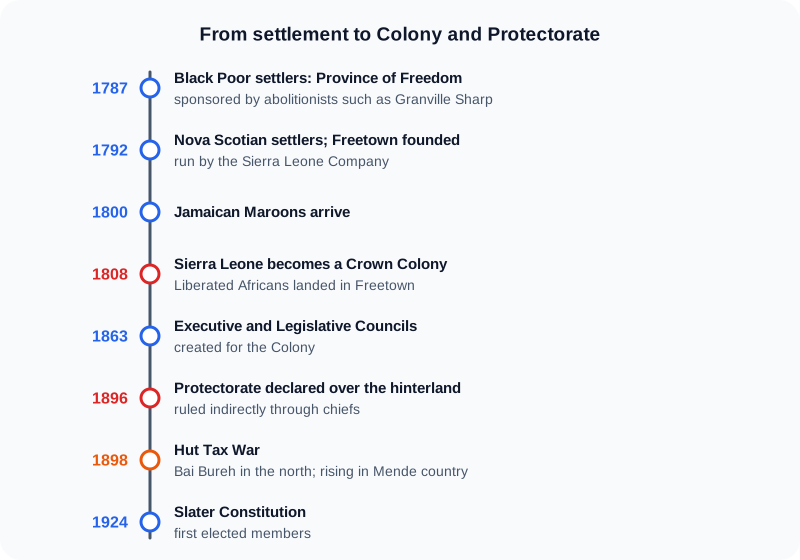
Figure 1. From settlement to Colony and Protectorate. WASSCE Tutor diagram.
| Date | Event |
|---|---|
| 1787 | About 400 "Black Poor" from London, sponsored by abolitionists including Granville Sharp, settle in the Province of Freedom on land obtained from Temne rulers |
| 1792 | About 1,100 Nova Scotian settlers, led by John Clarkson, found Freetown under the Sierra Leone Company |
| 1800 | Jamaican Maroons arrive |
| 1808 | Sierra Leone becomes a British Crown Colony (1 January) |
| From 1808 | The Royal Navy lands Liberated Africans (recaptives) freed from slave ships in Freetown |
| 1863 | Executive and Legislative Councils are created for the Colony |
| 1896 | Britain declares a Protectorate over the hinterland |
| 1898 | The Hut Tax War |
The Liberated Africans and the Krio
After Britain abolished the slave trade in 1807, the Royal Navy intercepted slave ships off West Africa and brought the freed captives to Freetown. These Liberated Africans came from many parts of West Africa. Over time they and the earlier settlers formed the Krio community, with its own language, churches and schools, such as Fourah Bay College (1827). Krio professionals became teachers, clergy, lawyers, doctors and traders across British West Africa.
The Protectorate, 1896
On 31 August 1896, Britain declared a Protectorate over the territory behind the Colony. Reasons included:
- Competition with France, which was expanding in Guinea and could block Freetown's trade routes.
- Protecting trade with the interior, which was disrupted by wars between chiefdoms.
- Ending the slave trade and slave raiding in the hinterland.
- Securing the boundaries agreed with France (1895) and Liberia.
The Protectorate was divided into districts, each under a British District Commissioner, and ruled indirectly through the chiefs. A Frontier Police force kept order.
The Hut Tax War of 1898
To pay for administering the Protectorate, Governor Frederic Cardew imposed a house (hut) tax from 1898: five shillings a year on each house of up to four rooms and ten shillings on larger houses.
Causes of the war:
- Chiefs saw the tax as a sign that they had lost their land and sovereignty.
- People had little cash and were forced to work or sell crops to pay.
- Brutal collection by the Frontier Police, who flogged and humiliated chiefs who could not pay.
- Loss of chiefs' powers to District Commissioners.
- Resentment of the Krio traders and missionaries associated with British rule.
Course: In the north, Bai Bureh of Kasseh led a skilful guerrilla war from February 1898. In April, a coordinated rising in Mende country attacked British officials, Krio traders and missionaries. British troops crushed the resistance by the end of the year. Bai Bureh was captured in November 1898 and exiled; other leaders were executed.
Results: British control of the Protectorate was secured; the tax remained; a royal commission under Sir David Chalmers criticised the tax and its methods of collection; and suspicion grew between the Protectorate and the Colony.
The Colony and the Protectorate compared
| Colony | Protectorate | |
|---|---|---|
| Area | Freetown peninsula and nearby coast | The hinterland |
| Legal status | British territory; inhabitants British subjects | Under British protection; inhabitants "British protected persons" |
| System of rule | Direct rule: Governor, Executive and Legislative Councils | Indirect rule through Paramount Chiefs under District Commissioners |
| Law | English law and courts | Mainly customary law and native courts |
| Population | Mainly Krio, with others | Mende, Temne, Limba and other groups |
| Education | Many schools; Fourah Bay College | Few schools until later |
The division between Colony and Protectorate shaped Sierra Leone's politics for decades. It produced different laws, unequal access to education, and rivalry between Krio leaders in Freetown and the educated leaders of the Protectorate, which surfaced sharply in the debates over the 1951 constitution.
Freetown did not become a Crown Colony in 1787 or 1792. It was first run by a private company, the Sierra Leone Company, and became a Crown Colony on 1 January 1808. The Protectorate came much later, in 1896.
Key points
- 1787 Province of Freedom; 1792 Nova Scotians found Freetown; 1800 Maroons; 1808 Crown Colony.
- Liberated Africans landed after 1807 helped form the Krio community.
- Protectorate declared on 31 August 1896, partly to block French expansion.
- The Hut Tax (from 1898) caused the Hut Tax War: Bai Bureh in the north and a Mende rising in the south.
- The Colony had direct rule; the Protectorate had indirect rule through chiefs.
WASSCE examination focus
Expect to explain why the Protectorate was declared, to state the causes and effects of the Hut Tax War, and to distinguish the administration of the Colony and the Protectorate. Dates (1787, 1792, 1808, 1896, 1898) are often tested in objective questions.
Quick check
- When did Sierra Leone become a British Crown Colony?
- Who were the Liberated Africans?
- State two reasons why Britain declared the Protectorate in 1896.
- Which governor imposed the hut tax?
Answers:
- On 1 January 1808.
- Africans freed from slave ships by the Royal Navy after the abolition of the slave trade in 1807 and landed in Freetown.
- Any two: to stop French expansion; to protect trade with the interior; to end slave raiding; to secure the boundaries with French Guinea and Liberia.
- Governor Frederic Cardew.
Keep going with british colonial administration in sierra leone
This is one of 2 lessons in British Colonial Administration in Sierra Leone. Start free with the first lesson of every topic, then unlock them all, plus exam-style practice marked instantly and guided learning tools, from 25 NLe.
- Free account, no card needed
- Everything from 25 NLe
- No automatic renewal
More lessons in British Colonial Administration in Sierra Leone
- Indirect rule in the Protectorate: features, merits and effects🔒