WASSCE Economics · Economic Integration in West Africa
Economic integration: forms, benefits and problems
By the WASSCE Tutor team
Updated 12 November 2026 · 7 min read · Prepared against the WASSCE syllabus.
A trader taking goods from Freetown to Conakry or Monrovia meets customs posts, tariffs and three different currencies. Economic integration removes such barriers so that neighbouring countries can trade and grow as one larger market. This lesson explains the forms integration takes, the benefits it brings and why it is hard to achieve.
Learning objectives
By the end of this lesson you should be able to:
- define economic integration
- describe the forms (stages) of economic integration
- explain the benefits of economic integration
- explain the problems facing economic integration in West Africa
What is economic integration?
Economic integration is an arrangement among countries, usually in the same region, to reduce or remove barriers to trade and to the movement of goods, services, people and capital between them, and to coordinate their economic policies.
Forms (stages) of integration
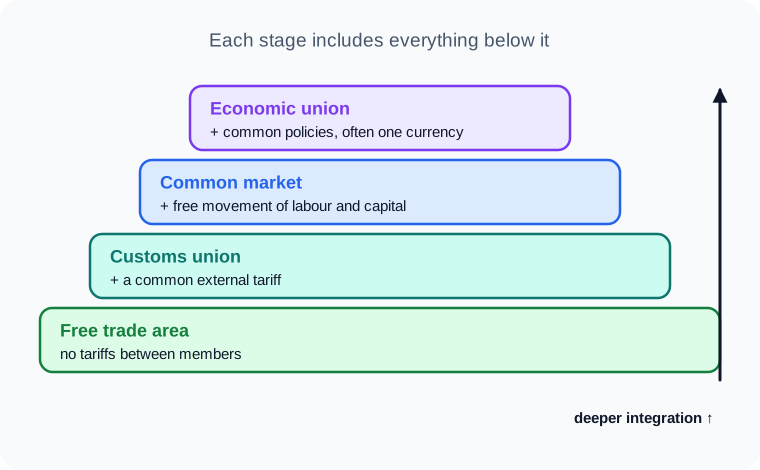
Figure 1. Each stage of integration includes everything in the stage before it. WASSCE Tutor diagram.
| Form | Features | Example |
|---|---|---|
| Preferential trade area | Members charge each other lower tariffs than non-members | An early stage of many regional groups |
| Free trade area | No tariffs on trade between members; each member keeps its own tariffs on outsiders | The African Continental Free Trade Area (AfCFTA) |
| Customs union | A free trade area plus a common external tariff (CET) on imports from outside | ECOWAS adopted a common external tariff in 2015 |
| Common market | A customs union plus free movement of labour and capital | The goal of ECOWAS's free movement protocols |
| Economic union | A common market plus coordinated economic policies, often a single currency and central bank | The European Union; WAEMU (UEMOA) in francophone West Africa |
| Political union | Members merge into one state | (The final, rare stage) |
The difference between a free trade area and a customs union is the common external tariff. In a free trade area each member sets its own tariffs on outsiders; in a customs union they all charge the same tariff.
Benefits of economic integration
- A larger market: firms can sell to many countries, gaining economies of scale.
- Specialisation: each country concentrates on what it does best, raising total output.
- Increased trade among members as barriers fall.
- More competition, improving efficiency and quality and lowering prices.
- Attraction of investment, both local and foreign, into the larger market.
- Free movement of labour and capital to where they are most productive.
- Joint projects: roads, power lines, telecommunications that no single small country could afford.
- Stronger bargaining power in world trade negotiations.
- Political cooperation and peace between neighbours.
Why a bigger market matters. A cement factory in Sierra Leone may need to sell 1 million tonnes a year to reach its lowest average cost, but the home market buys only 600,000 tonnes. With free access to Guinea and Liberia, it can sell the full million, cut its average cost and charge lower prices in all three countries.
Problems of economic integration in West Africa
- Similar products: members mostly produce the same primary goods (cocoa, minerals, palm oil), so they have little to sell each other.
- Poor transport and communications between countries.
- Many different currencies, which makes trade and payments costly.
- Loss of customs revenue, which governments rely on.
- Unequal distribution of benefits: richer, more industrial members gain more, and poorer members fear domination.
- Political instability, coups and border disputes.
- Loyalty to former colonial powers, with trade and currency links running to Europe.
- Non-tariff barriers: roadblocks, harassment and delays at borders.
- Different economic policies and levels of development.
- Lack of political will to give up national control.
- Language differences between anglophone, francophone and lusophone states.
Solutions
Improve regional roads, railways and power links; harmonise customs procedures and remove roadblocks; work towards a common currency; compensate members that lose revenue; encourage industries that complement rather than duplicate each other; strengthen regional institutions; and promote peace and good governance.
A trader from Kambia crossing to Guinea can, under ECOWAS rules, move goods duty-free and travel without a visa. In practice, many traders still report delays, unofficial payments and roadblocks at border crossings: a non-tariff barrier that integration agreements are meant to remove.
Key points
- Economic integration removes barriers to trade and movement between member countries.
- Stages: preferential trade area → free trade area → customs union → common market → economic union.
- A customs union adds a common external tariff; a common market adds free movement of labour and capital.
- Benefits: larger markets, economies of scale, specialisation, investment, joint projects.
- Problems in West Africa: similar products, poor transport, many currencies, loss of revenue, unequal gains, instability.
WASSCE examination focus
Expect to define economic integration, to describe its forms and distinguish them (especially free trade area, customs union and common market), and to explain the benefits and problems of integration in West Africa. Give one clear example for each form.
Quick check
- What is the difference between a customs union and a common market?
- Give three benefits of economic integration.
- Why do West African countries trade relatively little with each other?
- What is a common external tariff?
Answers: 1. A common market adds free movement of labour and capital to a customs union. 2. Any three: larger market, economies of scale, specialisation, more trade, competition, investment, free movement of factors, joint projects, bargaining power, peace. 3. Any one or more: they produce similar primary goods, transport links are poor, currencies differ, and non-tariff barriers remain. 4. The same tariff charged by all members of a customs union on imports from non-members.
Keep going with economic integration in west africa
This is one of 2 lessons in Economic Integration in West Africa. Start free with the first lesson of every topic, then unlock them all, plus exam-style practice marked instantly and guided learning tools, from 25 NLe.
- Free account, no card needed
- Everything from 25 NLe
- No automatic renewal
More lessons in Economic Integration in West Africa
- ECOWAS, the Mano River Union and African integration🔒