WASSCE Economics · Economic Growth, Development, and Planning
Economic growth and development, and the vicious circle of poverty
By the WASSCE Tutor team
Updated 12 November 2026 · 8 min read · Prepared against the WASSCE syllabus.
A country's output can grow while most of its people stay poor, without clean water, good schools or jobs. Economists therefore separate economic growth from economic development. This lesson explains the difference, how development is measured, the features of developing countries, and the trap that keeps many of them poor.
Learning objectives
By the end of this lesson you should be able to:
- distinguish economic growth from economic development
- explain the indicators used to measure development, including the Human Development Index
- describe the characteristics of developing countries
- explain the vicious circle of poverty and how it can be broken
- explain the obstacles to development in West Africa
Growth and development
- Economic growth is a sustained increase in a country's real output (real GDP or real GDP per head) over time. It is a quantitative change.
- Economic development is a broad improvement in the living standards and welfare of the people: higher real incomes plus better health, education, housing and freedom, less poverty and inequality, and changes in the structure of the economy. It is a qualitative as well as quantitative change.
| Economic growth | Economic development |
|---|---|
| Increase in real output | Improvement in welfare and quality of life |
| Measured by real GDP growth | Measured by many indicators (HDI, poverty, literacy, life expectancy) |
| Can happen without development (for example a mining boom whose profits go abroad) | Usually needs growth, but also fair distribution and better services |
| Quantitative | Qualitative and quantitative |
Measuring development
- Real GDP per head, adjusted for prices.
- Life expectancy at birth.
- Infant and maternal mortality rates.
- Literacy rate and school enrolment.
- Access to clean water, sanitation and electricity.
- The share of the population in poverty.
- The structure of employment: the share in agriculture versus industry and services.
- Calorie intake, doctors per head and housing quality.
The Human Development Index (HDI)
The United Nations Development Programme (UNDP) publishes the HDI, which combines three dimensions:
| Dimension | Measured by |
|---|---|
| A long and healthy life | Life expectancy at birth |
| Knowledge | Mean and expected years of schooling |
| A decent standard of living | Gross national income per head (adjusted for prices) |
The HDI runs from 0 to 1. Countries are grouped as very high, high, medium or low human development. Sierra Leone is in the low human development group, though its score has risen since the end of the civil war.
Characteristics of developing countries
- Low income per head and widespread poverty.
- Dependence on agriculture, much of it subsistence, with low productivity.
- Dependence on a few primary exports (minerals, cash crops).
- Rapid population growth and a high dependency ratio.
- High unemployment and underemployment.
- Low levels of saving and investment; shortage of capital.
- Poor infrastructure: roads, power, water, communications.
- Low levels of education and health: high illiteracy, high infant mortality.
- Unequal distribution of income and a dual economy (a small modern sector beside a large traditional one).
- Weak technology and a shortage of skilled workers.
- Heavy foreign debt and dependence on aid.
The vicious circle of poverty
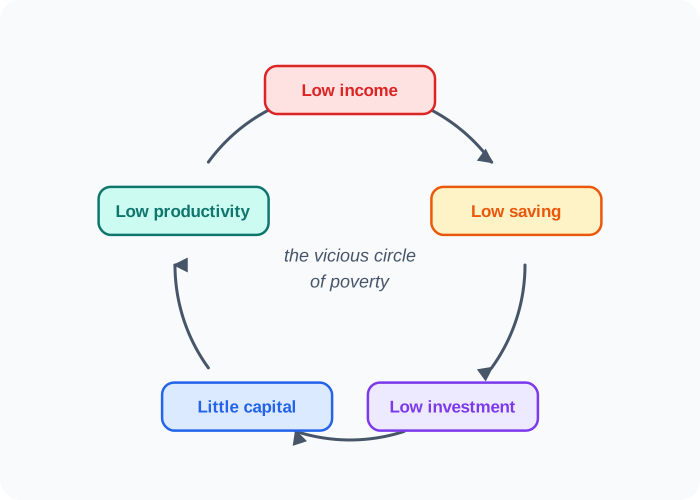
Figure 1. The vicious circle of poverty. WASSCE Tutor diagram.
Because incomes are low, people can save little. Low saving means low investment, so the economy has little capital (machines, roads, power). With little capital, productivity stays low, and so incomes stay low. The circle repeats.
A similar circle runs through demand: low incomes mean small markets, so firms have little reason to invest, which keeps productivity and incomes low.
Breaking the circle:
- Foreign investment and aid bring capital from outside.
- Raising saving through banks, cooperatives and mobile money.
- Education and training, which raise productivity directly.
- Better infrastructure, which makes all investment more productive.
- Land and agricultural reform, raising farm output.
- Regional integration, which widens markets.
Obstacles to development in West Africa
| Obstacle | Explanation |
|---|---|
| Shortage of capital | Low saving, weak banks and capital flight |
| Rapid population growth | Gains in output are shared among more people |
| Poor infrastructure | Unreliable power and bad roads raise costs |
| Low human capital | Illiteracy, poor health and the emigration of skilled people (brain drain) |
| Political instability and corruption | Discourage investment and waste public funds |
| Dependence on primary exports | Earnings fluctuate with world prices |
| Heavy debt | Repayments take money from development |
| Weak institutions | Poor property rights, slow courts, red tape |
| Disease and disasters | Malaria, Ebola, floods |
Sierra Leone's mining output has at times made GDP grow fast, for example when large iron-ore exports began in the early 2010s. But because mining employs relatively few people and much of the profit goes abroad, rapid growth did not bring equally rapid development for most households. This is a classic example of growth without development.
"Economic growth" and "economic development" are not interchangeable. A question asking you to "distinguish" them wants the difference: growth is a rise in output; development is a rise in welfare.
Key points
- Growth is a rise in real output; development is a broad rise in welfare and quality of life.
- Development is measured by income per head, life expectancy, literacy, poverty and the HDI.
- Developing countries have low incomes, dependence on agriculture and primary exports, rapid population growth and low capital.
- The vicious circle of poverty: low income → low saving → low investment → low productivity → low income.
- Obstacles include capital shortage, poor infrastructure, low human capital, instability and debt.
WASSCE examination focus
WASSCE often asks you to distinguish economic growth from economic development, to state the characteristics of developing countries, to explain the vicious circle of poverty, and to discuss obstacles to development and how to overcome them. Draw or describe the circle step by step, and suggest a way to break it.
Quick check
- Distinguish economic growth from economic development.
- Name the three dimensions of the Human Development Index.
- Why does low income lead to low investment in a poor country?
- Give two obstacles to development in Sierra Leone.
Answers: 1. Growth is a sustained rise in real output; development is a broad improvement in welfare, health, education and quality of life. 2. A long and healthy life, knowledge, and a decent standard of living. 3. People with low incomes can save little, so few funds are available for investment. 4. Any two: shortage of capital, rapid population growth, poor infrastructure, low human capital, instability, corruption, dependence on primary exports, debt, disease.
Keep going with economic growth, development, and planning
This is one of 2 lessons in Economic Growth, Development, and Planning. Start free with the first lesson of every topic, then unlock them all, plus exam-style practice marked instantly and guided learning tools, from 25 NLe.
- Free account, no card needed
- Everything from 25 NLe
- No automatic renewal
More lessons in Economic Growth, Development, and Planning
- Development planning and foreign aid🔒