WASSCE Commerce · Production and Occupations
Production, occupations and the factors of production
By the WASSCE Tutor team
Updated 12 November 2026 · 6 min read · Prepared against the WASSCE syllabus.
The fisherman at Tombo, the woman smoking fish beside him, the lorry driver who carries the fish to Bo and the teacher whose pupils eat it are all engaged in production. Production is far wider than making things in factories. This lesson explains its types, the occupations people follow and the resources every producer needs.
Learning objectives
By the end of this lesson you should be able to:
- define production and state its aim
- describe the three types (stages) of production
- classify occupations into industrial, commercial and direct services
- name the factors of production and their rewards
What is production?
Production is the creation of goods and services to satisfy human wants. It is complete only when the goods or services reach the final consumer.
The aim of production is to satisfy human wants and, for most producers, to earn an income or profit. A good that is made but never reaches a buyer has not completed production.
Types (stages) of production
| Type | What it involves | Examples in Sierra Leone |
|---|---|---|
| Primary (extractive) | Taking resources from nature | Farming rice and cassava, fishing, mining iron ore and diamonds, logging, quarrying |
| Secondary (manufacturing and construction) | Turning raw materials into finished goods; building | Rice milling, palm-oil processing, brewing, soap making, block making, road building |
| Tertiary (services) | Providing services to distribute goods or serve people | Trade, transport, banking, insurance, teaching, nursing |
The three stages form a chain of production: primary output becomes the raw material of secondary production, and tertiary services carry the finished goods to consumers.
The chain of production for palm oil.
- Primary: a farmer in Pujehun harvests palm fruit.
- Secondary: a mill presses the fruit into oil and bottles it.
- Tertiary: a lorry carries the oil to Freetown; a wholesaler stores it; a bank finances the trader; a market woman sells it by the cup.
Production is complete when a family buys the oil to cook with.
Occupations
An occupation is the work a person does to earn a living.
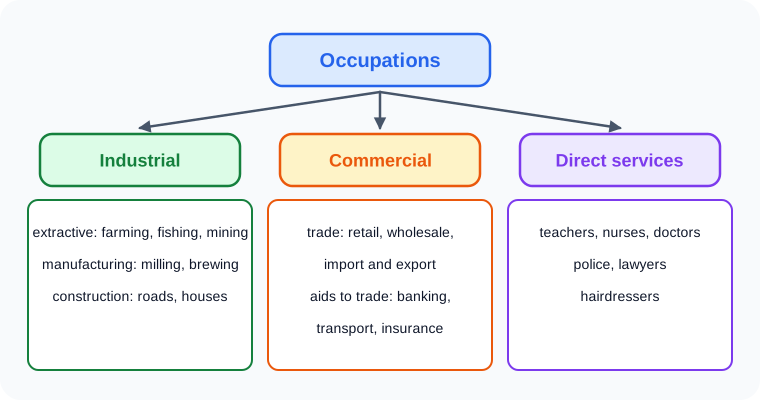
Figure 1. The classification of occupations. WASSCE Tutor diagram.
1. Industrial occupations
People who produce goods:
- Extractive: farmers, fishermen, miners, hunters, lumbermen.
- Manufacturing: workers who turn raw materials into goods: millers, tailors, carpenters, factory workers.
- Construction: builders, masons, road and bridge workers, engineers.
2. Commercial occupations
People who distribute goods and services:
- Trade: retailers, wholesalers, importers, exporters.
- Aids to trade: transporters, bankers, insurers, warehouse keepers, advertisers, communication workers.
3. Direct services
People who give personal services directly to others, often paid by the government or by their clients: teachers, doctors, nurses, police officers, soldiers, lawyers, hairdressers, tailors working to order, and domestic workers.
A teacher does not produce a physical good, but teaching is production: it satisfies a human want (education) and is paid for. Do not say direct services "are not production".
Factors of production
To produce anything, four resources are combined:
| Factor | Meaning | Reward |
|---|---|---|
| Land | All natural resources: soil, minerals, rivers, forests, the sea | Rent |
| Labour | Human effort, physical and mental | Wages and salaries |
| Capital | Man-made goods used to produce other goods: tools, machines, buildings, vehicles | Interest |
| Entrepreneur | The person who organises the other factors and bears the risks | Profit |
Features of the factors:
- Land is a gift of nature and fixed in supply.
- Labour varies in skill and can be trained; it is mobile between jobs and places to some degree.
- Capital is made by people through saving and investment; it depreciates (wears out).
- The entrepreneur makes decisions, organises production and bears uninsurable risks such as a fall in demand.
A woman who runs a tailoring shop in Kenema combines all four factors: the land her shop stands on, her own labour and that of her apprentices, her sewing machines and stock of cloth (capital), and her own enterprise in deciding what to make, how to price it and when to take risks on new designs.
Key points
- Production creates goods and services to satisfy wants; it ends with the final consumer.
- Three types: primary (extraction), secondary (manufacturing and construction), tertiary (services).
- Occupations are industrial, commercial or direct services.
- The factors of production are land, labour, capital and the entrepreneur, earning rent, wages, interest and profit.
WASSCE examination focus
WASSCE often asks you to classify occupations (sometimes with a diagram), to explain the types of production with examples, and to name the factors of production and their rewards. Use clear examples from your area for each type of production and occupation.
Quick check
- When is production complete?
- Is a lorry driver carrying rice engaged in primary, secondary or tertiary production?
- Classify these occupations: miner, banker, nurse, brick maker.
- What is the reward for capital?
Answers: 1. When the goods or services reach the final consumer. 2. Tertiary (a commercial service: transport). 3. Miner: industrial (extractive). Banker: commercial (aid to trade). Nurse: direct service. Brick maker: industrial (manufacturing or construction). 4. Interest.
Keep going with production and occupations
This is one of 2 lessons in Production and Occupations. Start free with the first lesson of every topic, then unlock them all, plus exam-style practice marked instantly and guided learning tools, from 25 NLe.
- Free account, no card needed
- Everything from 25 NLe
- No automatic renewal
More lessons in Production and Occupations
- Division of labour, specialisation and exchange🔒