WASSCE Commerce · E-Commerce and Modern Trends in Commerce
E-commerce: meaning, types and how it works
By the WASSCE Tutor team
Updated 12 November 2026 · 8 min read · Prepared against the WASSCE syllabus.
A tailor in Bo posts photos of new designs on WhatsApp and Facebook, takes orders in the comments, receives payment by mobile money and sends the clothes with a delivery rider. She has no website and no shop on a main road, yet she is doing e-commerce. Electronic commerce has changed how goods are bought and sold everywhere, including Sierra Leone.
Learning objectives
By the end of this lesson you should be able to:
- define e-commerce and its main types
- explain how an online purchase works
- describe the requirements and payment methods for e-commerce
- state the advantages and disadvantages of e-commerce to businesses and consumers
- compare the costs of selling online with selling from a shop
Meaning of e-commerce
Electronic commerce (e-commerce) is the buying and selling of goods and services, and the transfer of money, through electronic networks, mainly the internet and mobile phones.
E-commerce includes online shops, social media selling, mobile money payments, online banking, and electronic ordering between businesses.
Types of e-commerce
| Type | Who trades with whom | Example |
|---|---|---|
| B2C (business to consumer) | A business sells to individual buyers | An online supermarket or phone shop selling to the public |
| B2B (business to business) | Businesses trade with each other | A wholesaler taking orders from retailers online |
| C2C (consumer to consumer) | Individuals sell to each other through a platform | Selling a used phone on a Facebook group |
| C2B (consumer to business) | Individuals sell products or services to firms | A freelance designer selling work to companies online |
| G2B / G2C (government to business / citizens) | Government services online | Online tax filing, business registration, exam result checking |
| B2G (business to government) | Firms supply government through online tenders | E-procurement |
Social commerce, selling through WhatsApp, Facebook, Instagram and TikTok, is the most common form of e-commerce for small traders in West Africa.
How an online purchase works
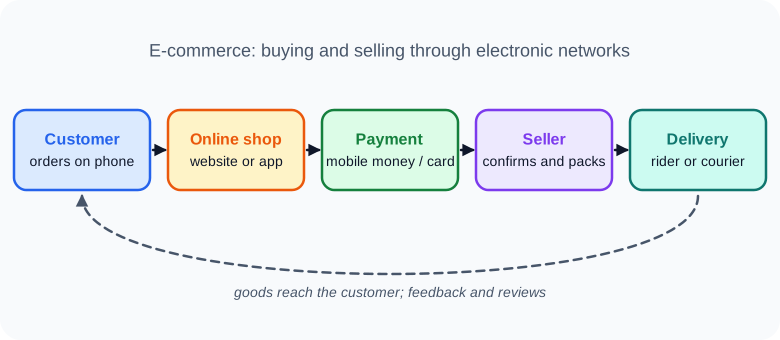
Figure 1. The steps of an online purchase. WASSCE Tutor diagram.
- The customer browses the products on a website, app or social media page.
- The customer orders: selects the items, quantity and delivery address.
- The customer pays by mobile money, card or bank transfer, or chooses cash on delivery.
- The seller confirms the order and packs the goods.
- A delivery rider or courier brings the goods; the customer may track them.
- The customer receives the goods and leaves feedback or a review.
Requirements for e-commerce
- Internet access and devices: smartphones, computers.
- A website, app or social media page to display goods.
- Electronic payment systems: mobile money, cards, online banking.
- Delivery services: couriers, delivery riders, postal services.
- Electricity.
- Trust and security: secure payments, honest sellers, data protection.
- Laws on electronic transactions, consumer protection and cybercrime.
- Digital skills for sellers and buyers.
Payment methods
| Method | Notes |
|---|---|
| Mobile money | Most widely used in Sierra Leone; works without a bank account |
| Debit and credit cards | Common for international purchases; need a bank account |
| Bank transfer / internet banking | Used for larger payments |
| Cash on delivery | Builds trust where buyers fear fraud; risky for sellers |
| Payment gateways | Services that let websites accept mobile money and cards |
Advantages and disadvantages
| Advantages | Disadvantages | |
|---|---|---|
| To businesses | Wider market, local and global; lower costs (no rent for a large shop, fewer staff); open 24 hours; easy advertising on social media; customer data helps marketing; faster ordering from suppliers | Needs internet, power and skills; delivery problems; fraud and fake payments; strong competition; returns and complaints are costly; cyber attacks |
| To consumers | Convenience: shop from home at any time; wide choice; easy price comparison; home delivery; saves time and transport costs | Cannot inspect goods before buying; risk of fraud and fake sellers; delivery delays; data and privacy risks; needs data and a phone; returns can be difficult |
Online or shop? A trader sells 120 dresses a month at NLe 150 each. Each dress costs her NLe 100.
| Monthly item | Shop | Online (social media) |
|---|---|---|
| Gross profit | NLe 6,000 | NLe 6,000 |
| Shop rent | NLe 2,500 | none |
| Data and advertising | none | NLe 400 |
| Delivery (NLe 10 per order paid by trader) | none | NLe 1,200 |
| Net profit | NLe 3,500 | NLe 4,400 |
Selling online earns NLe 900 more a month here, and can reach buyers outside her town. But she must build trust, deliver reliably and guard against payment fraud. Many traders do both: a small shop plus online selling.
E-commerce in Sierra Leone
Growth factors:
- rapid spread of mobile phones and mobile money
- cheaper data
- popularity of WhatsApp and Facebook
- delivery riders in Freetown and other towns
- young, tech-aware buyers
Problems:
- poor network coverage outside the towns
- unreliable electricity
- lack of street addresses, which makes delivery hard
- online fraud and fake sellers
- low trust in paying in advance
- low digital skills
- high data costs for some
- weak laws and enforcement against cybercrime
Many Freetown businesses now take orders through WhatsApp catalogues, accept mobile money, and use okada and keke delivery riders. Because there are few formal street addresses, deliveries rely on landmarks and phone calls: "near the mosque at Lumley, call me when you reach".
E-commerce is not only "buying on websites". Selling through social media, paying with mobile money, online banking and electronic ordering between businesses are all e-commerce.
Key points
- E-commerce is buying and selling through electronic networks (internet and mobile phones).
- Types: B2C, B2B, C2C, C2B, G2B/G2C, B2G; social commerce is the most common for small traders.
- It needs internet, devices, payment systems, delivery, power, trust and laws.
- It gives wider markets, lower costs and convenience, but brings fraud, delivery and trust problems.
WASSCE examination focus
Expect to define e-commerce, to state its types, to give advantages and disadvantages to businesses and consumers, and to explain the problems of e-commerce in your country. Give examples such as mobile money and social media selling.
Quick check
- Define e-commerce.
- What is B2B e-commerce? Give an example.
- Give two advantages of e-commerce to consumers.
- Give three problems of e-commerce in Sierra Leone.
Answers: 1. Buying and selling goods and services, and transferring money, through electronic networks such as the internet and mobile phones. 2. Businesses trading with each other electronically, such as a wholesaler taking online orders from retailers. 3. Any two: convenience, wide choice, easy price comparison, home delivery, saves time and transport costs. 4. Any three: poor network coverage, unreliable power, lack of street addresses, online fraud, low trust, low digital skills, high data costs, weak cybercrime enforcement.
Keep going with e-commerce and modern trends in commerce
This is one of 2 lessons in E-Commerce and Modern Trends in Commerce. Start free with the first lesson of every topic, then unlock them all, plus exam-style practice marked instantly and guided learning tools, from 25 NLe.
- Free account, no card needed
- Everything from 25 NLe
- No automatic renewal
More lessons in E-Commerce and Modern Trends in Commerce
- Modern trends in commerce🔒