WASSCE Commerce · Aids to Trade
Aids to trade: removing the hindrances to trade
By the WASSCE Tutor team
Updated 12 November 2026 · 7 min read · Prepared against the WASSCE syllabus.
A cocoa farmer in Kailahun and a chocolate maker in Europe will never meet. Between them lie hundreds of kilometres, months of waiting, risks of loss, the need for money and the need for information. Each of these is a hindrance to trade, and each is removed by an aid to trade. This lesson explains how.
Learning objectives
By the end of this lesson you should be able to:
- define aids to trade and the hindrances to trade
- explain how each aid to trade removes a hindrance
- explain the importance of aids to trade to commerce and to Sierra Leone
Hindrances to trade
A hindrance to trade is anything that makes it difficult for goods to pass from producers to consumers. Aids to trade are the services that remove these hindrances, so that trade can take place smoothly.
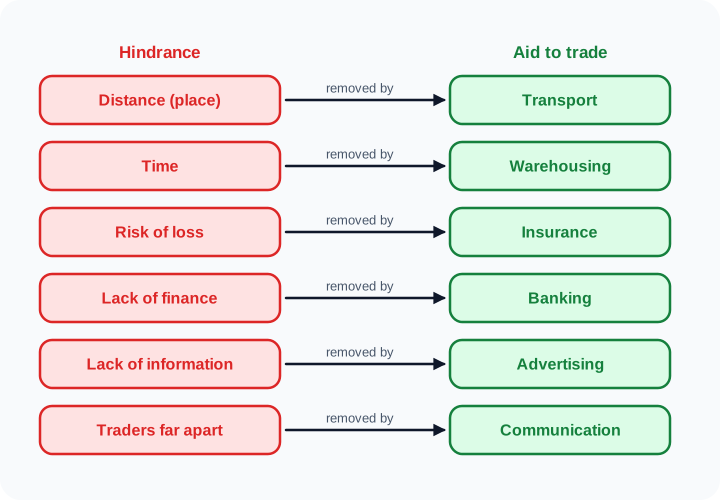
Figure 1. Each aid to trade removes a hindrance. WASSCE Tutor diagram.
How each aid helps trade
1. Transport: the hindrance of place (distance)
Goods are produced in one place and wanted in another. Transport moves raw materials to factories and finished goods to markets and consumers by road, rail, water, air and pipeline.
- It widens the market, so producers can sell beyond their own area.
- It makes goods available where they are needed (place utility).
- It helps to even out prices between areas of surplus and shortage.
2. Warehousing: the hindrance of time
Many goods are produced at one time and consumed over a longer period (rice is harvested once or twice a year but eaten every day), or produced continuously for seasonal demand. Warehousing stores goods until they are needed.
- It ensures a steady supply all year round (time utility).
- It helps to stabilise prices by releasing stock when supply is short.
- It protects goods from damage, theft and the weather.
3. Insurance: the hindrance of risk
Goods and business property can be lost through fire, theft, accident, flood or loss at sea. Insurance spreads the risk: many people pay small premiums into a fund that compensates the few who suffer losses.
- Traders and transporters can operate with confidence.
- Banks are more willing to lend against insured goods and property.
4. Banking: the hindrance of finance and payment
Traders need money to buy stock, and they need safe ways to pay and be paid. Banks provide:
- loans and overdrafts to finance trade
- safe means of payment: cheques, transfers, cards, mobile banking
- safe keeping of money and valuables
- services for foreign trade: letters of credit and foreign exchange
5. Advertising: the hindrance of ignorance (lack of information)
Consumers cannot buy what they do not know exists. Advertising informs and persuades buyers about goods, prices and where to buy them.
- It creates and increases demand.
- It introduces new products and helps firms reach new markets.
6. Communication: the hindrance of distance between traders
Buyers and sellers must exchange information: enquiries, orders, prices, delivery dates and payments. Communication (telephone, letters, email, SMS, the internet, courier) makes this possible without travelling.
- It speeds up business and lowers its cost.
- It links traders across the country and the world.
Do not mix up the hindrances. Transport removes the hindrance of place (distance between producer and consumer); communication removes the hindrance of distance between traders who need to exchange information. They are different aids.
The importance of aids to trade
| Importance | Explanation |
|---|---|
| Make trade possible | Without them, goods could not move easily from producers to consumers |
| Widen markets | Producers can sell to distant buyers, at home and abroad |
| Encourage specialisation and large-scale production | Firms can rely on supplies, finance and markets |
| Create employment | Drivers, bank staff, insurers, warehouse workers, advertisers, telecom workers |
| Stabilise prices and supplies | Warehousing and transport move goods from surplus to shortage |
| Raise living standards | Consumers get a wide variety of goods all year round |
| Earn revenue | Governments tax transport, telecoms, banking and insurance services |
Which aid to trade is most needed? Identify the aid for each problem.
| Problem | Aid |
|---|---|
| Tomatoes from Bo rot before they reach Freetown markets | Transport (faster lorries, better roads) and cold storage (warehousing) |
| A shopkeeper wants to buy stock but has no cash | Banking (a loan or overdraft) |
| A trader fears a fire could destroy her shop | Insurance |
| A new soap brand is not selling because no one has heard of it | Advertising |
| An importer needs to confirm prices with a supplier in China | Communication |
Sierra Leone's aids to trade include the Queen Elizabeth II Quay in Freetown and the international airport at Lungi (transport), mobile networks such as Orange, Africell and Qcell (communication), commercial banks and mobile money (banking), insurance companies supervised by the Sierra Leone Insurance Commission (insurance), cold stores and warehouses (warehousing), and radio, billboards and social media (advertising).
Key points
- Hindrances to trade: place, time, risk, finance, ignorance and distance between traders.
- Aids to trade: transport, warehousing, insurance, banking, advertising and communication remove them.
- Aids to trade widen markets, encourage specialisation, create jobs, stabilise prices and raise living standards.
WASSCE examination focus
A favourite question: "Explain how each of the aids to trade helps commerce" or "name the hindrance removed by each aid". Write each aid as a heading, name the hindrance it removes, then give one or two specific ways it helps, with an example.
Quick check
- Which hindrance does insurance remove?
- How does warehousing create time utility?
- Give two ways banks help traders.
- Why is advertising called an aid to trade?
Answers: 1. The hindrance of risk. 2. It stores goods until they are needed, so they are available when consumers want them. 3. Any two: loans and overdrafts, safe means of payment, safe keeping, foreign exchange and letters of credit. 4. It removes ignorance by informing buyers about goods, so it creates and increases demand.
Keep going with aids to trade
This is one of 2 lessons in Aids to Trade. Start free with the first lesson of every topic, then unlock them all, plus exam-style practice marked instantly and guided learning tools, from 25 NLe.
- Free account, no card needed
- Everything from 25 NLe
- No automatic renewal
More lessons in Aids to Trade
- Aids to trade in practice: working together, new aids and problems🔒