WASSCE Chemistry · Introduction to Chemistry
What chemistry is: branches, importance and careers
By the WASSCE Tutor team
Updated 12 November 2026 · 7 min read · Prepared against the WASSCE syllabus.
Every time water is treated at Guma Valley, palm kernel oil is boiled into soap, cassava is fermented into gari or a pharmacist mixes a medicine, chemistry is at work. Chemistry explains what things are made of, how they change and how we can control those changes. This lesson sets out what chemistry is, its branches and why it matters to Sierra Leone.
Learning objectives
By the end of this lesson you should be able to:
- define chemistry and state what chemists study
- name the main branches of chemistry and what each studies
- explain the importance of chemistry in everyday life and in national development
- describe some harmful effects of chemicals and how to reduce them
- name careers that need chemistry
What is chemistry?
Chemistry is the branch of science that studies the composition, structure and properties of matter, the changes that matter undergoes, and the energy involved in those changes.
A chemist asks four kinds of question:
- What is it made of? For example, which elements make up a fertiliser.
- How are its particles arranged? For example, why diamond is hard but graphite is soft.
- How does it change? For example, why iron roofing sheets rust faster near the sea.
- How can we use or control the change? For example, how to make soap from palm kernel oil.
Branches of chemistry
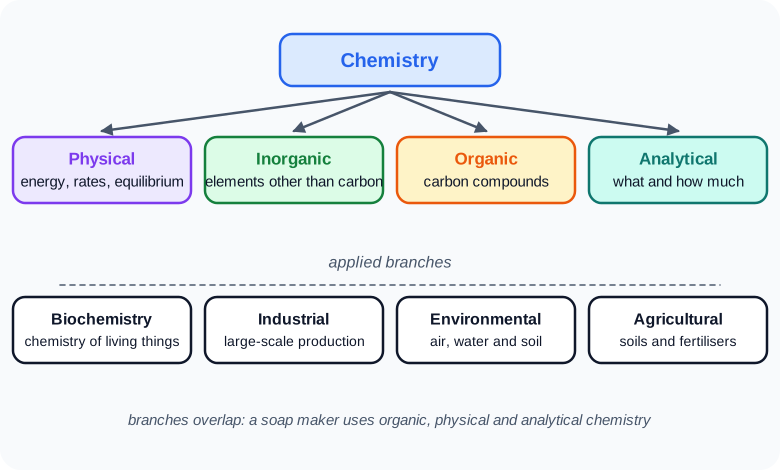
Figure 1. The main branches of chemistry. WASSCE Tutor diagram.
| Branch | What it studies | Example |
|---|---|---|
| Physical chemistry | Energy, rates, equilibrium and the physical properties of substances | How fast iron rusts; energy given out when charcoal burns |
| Inorganic chemistry | Elements and compounds other than most carbon compounds | Extracting aluminium from bauxite; making fertilisers |
| Organic chemistry | Compounds of carbon, mainly with hydrogen | Petrol, plastics, soap, medicines, palm oil |
| Analytical chemistry | Identifying substances and measuring how much is present | Testing water for impurities; checking drugs are genuine |
| Biochemistry | Chemical processes in living things | Digestion of food; fermentation of palm wine |
| Industrial chemistry | Making chemicals on a large scale, cheaply and safely | Brewing, cement making, soap factories |
| Environmental chemistry | Chemicals in air, water and soil, and pollution | Mercury from gold mining in rivers |
| Agricultural chemistry | Soils, fertilisers and pesticides | Choosing fertiliser for rice farms |
Importance of chemistry
| Area | How chemistry helps |
|---|---|
| Food | Fertilisers and pesticides raise crop yields; preservatives (salt, sugar, vinegar) keep food; chemistry explains cooking, fermentation and food spoilage |
| Health | Drugs, vaccines, antiseptics and disinfectants; testing blood and urine; purifying water |
| Water supply | Coagulation, filtration and chlorination make water safe to drink |
| Clothing and housing | Dyes, synthetic fibres, cement, paint, roofing sheets, glass |
| Energy | Petrol, diesel, kerosene, cooking gas, charcoal; batteries; solar cells |
| Industry | Soap, detergents, plastics, beverages, cosmetics, metals |
| Mining | Extracting and refining iron ore, rutile, bauxite, gold and diamonds |
| Environment | Detecting and reducing pollution; treating waste |
| Law and security | Forensic tests, such as testing for drugs or fake products |
Chemistry is at the heart of Sierra Leone's economy:
- Mining: iron ore at Tonkolili and Marampa, rutile (titanium dioxide) in Moyamba and Bonthe, bauxite (aluminium ore) and diamonds (pure carbon) in Kono.
- Water: Guma Valley Water Company uses chemicals to treat drinking water for Freetown.
- Local industry: soap makers, breweries, paint and cement plants and salt producers along the coast all depend on chemical changes.
Harmful effects of chemicals
Chemistry can also cause harm when it is misused:
- Pollution: smoke from vehicles, generators and burning refuse; oil spills; plastic waste blocking drains in Freetown.
- Poisoning: mercury used by some artisanal gold miners contaminates rivers and fish; pesticides used carelessly harm farmers.
- Drug abuse: misuse of medicines and illegal drugs damages health.
- Fake and expired drugs and adulterated goods.
- Accidents: fires and explosions from fuel stored at home.
- Chemical weapons and explosives.
Reducing harm:
- proper laws and inspection
- safe storage and labelling of chemicals
- careful waste disposal and recycling
- education on the safe use of chemicals
- replacing dangerous processes with cleaner ones
Careers that need chemistry
| Career | Work |
|---|---|
| Pharmacist | Prepares and dispenses medicines |
| Doctor, nurse, laboratory scientist | Diagnose and treat disease; test samples |
| Chemical or petroleum engineer | Designs and runs chemical plants and refineries |
| Mining engineer, metallurgist | Extracts and refines minerals and metals |
| Food scientist, brewer | Develops, preserves and checks food and drink |
| Agricultural scientist | Improves soils, fertilisers and crop protection |
| Environmental officer | Monitors pollution and enforces environmental rules |
| Forensic scientist | Analyses evidence for police and courts |
| Teacher and researcher | Teaches chemistry and develops new materials |
Organic chemistry is not just "the chemistry of living things". It is the chemistry of carbon compounds, most of which today are made in factories (plastics, petrol, medicines). The chemistry of living things is biochemistry.
Key points
- Chemistry studies the composition, structure and properties of matter, its changes and the energy involved.
- Main branches: physical, inorganic, organic and analytical. Applied branches include biochemistry, industrial, environmental and agricultural chemistry.
- Chemistry supports food, health, water, energy, industry and mining, but misuse causes pollution, poisoning and accidents.
- Many careers, from pharmacist to mining engineer, need chemistry.
WASSCE examination focus
Questions ask you to define chemistry, to name branches with examples, to state the importance of chemistry in areas such as food, health and industry, and to give harmful effects of chemicals. Give a specific example with each point, ideally a local one.
Quick check
- Define chemistry.
- Which branch of chemistry studies compounds of carbon?
- Give two ways chemistry helps agriculture.
- Give one harmful effect of chemicals and one way to reduce it.
Answers:
- The study of the composition, structure and properties of matter, the changes it undergoes and the energy involved.
- Organic chemistry.
- Any two: fertilisers, pesticides and herbicides, soil testing, food preservation, veterinary drugs.
- For example: mercury pollution from gold mining, reduced by banning mercury and using safer methods (or any sensible pair).
Keep going with introduction to chemistry
This is one of 2 lessons in Introduction to Chemistry. Start free with the first lesson of every topic, then unlock them all, plus exam-style practice marked instantly and guided learning tools, from 25 NLe.
- Free account, no card needed
- Everything from 25 NLe
- No automatic renewal
More lessons in Introduction to Chemistry
- Scientific method, measurement and laboratory safety🔒