WASSCE Chemistry · Electrochemical Cells
Electrochemical cells and the electrochemical series
By the WASSCE Tutor team
Updated 12 November 2026 · 8 min read · Prepared against the WASSCE syllabus.
Electrolysis uses electricity to force a reaction. An electrochemical cell does the reverse: it uses a spontaneous redox reaction to produce electricity. Every torch battery, phone battery and car battery is one. This lesson explains how a simple cell works, the electrochemical series that predicts which metal reacts, and how to write cell notation.
Learning objectives
By the end of this lesson you should be able to:
- distinguish an electrochemical (galvanic) cell from an electrolytic cell
- describe the Daniell cell and explain how it produces a current
- state the function of the salt bridge
- use the electrochemical series to predict displacement and the direction of electron flow
- write cell notation (cell diagrams)
Electrochemical and electrolytic cells
| Electrochemical (galvanic) cell | Electrolytic cell |
|---|---|
| Converts chemical energy into electrical energy | Converts electrical energy into chemical energy |
| Reaction is spontaneous | Reaction is forced by an external supply |
| Anode is negative, cathode is positive | Anode is positive, cathode is negative |
| Examples: Daniell cell, dry cell, car battery | Examples: electroplating, refining copper |
In both types, oxidation occurs at the anode and reduction at the cathode.
The Daniell cell
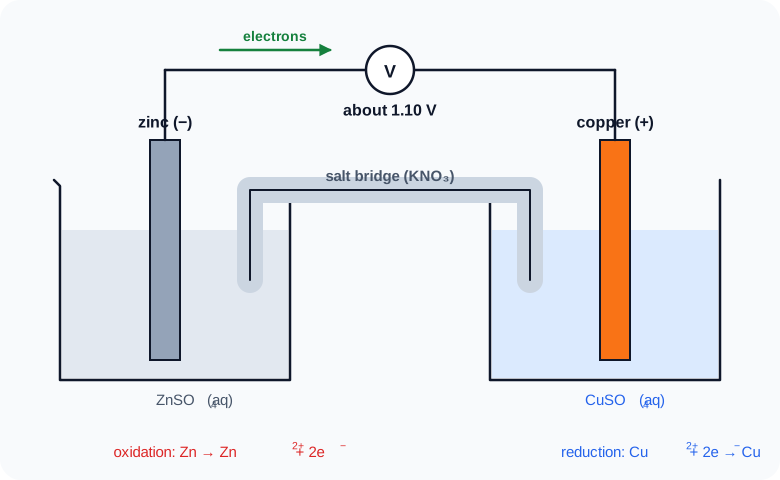
Figure 1. The Daniell cell. WASSCE Tutor diagram.
- Zinc half-cell: a zinc rod in zinc sulphate solution. Zinc is more reactive, so it loses electrons and dissolves:
- Copper half-cell: a copper rod in copper(II) sulphate solution. Cu²⁺ ions gain the electrons and deposit copper:
- Overall reaction:
- Electrons flow through the external wire from zinc to copper. The voltmeter reads about 1.10 V.
Observations over time: the zinc rod gets thinner, the copper rod gets thicker, and the blue colour of the copper(II) sulphate fades.
The salt bridge
The salt bridge is a tube or strip of filter paper soaked in a solution of an unreactive salt, such as potassium nitrate. It:
- completes the circuit by letting ions move between the half-cells
- keeps each solution electrically neutral: anions move towards the zinc half-cell (where Zn²⁺ is building up) and cations towards the copper half-cell (where Cu²⁺ is being used up)
- prevents the two solutions from mixing directly
Without the salt bridge, the current stops at once.
The electrochemical series
Metals (and hydrogen) can be arranged in order of their tendency to lose electrons and form ions:
| Most reactive (lose electrons most readily) | → | Least reactive |
|---|---|---|
| K, Na, Ca, Mg, Al | Zn, Fe, Sn, Pb, H | Cu, Hg, Ag, Au |
Uses of the series:
- Displacement: a metal displaces any metal below it from a solution of its salt. Iron displaces copper from CuSO₄, but copper cannot displace iron.
- Reaction with acids: metals above hydrogen displace hydrogen from dilute acids; those below (Cu, Ag, Au) do not.
- Cells: in a cell made from two metals, the higher metal is the negative electrode (anode), and electrons flow from it to the lower metal.
- The further apart the two metals are in the series, the larger the voltage of the cell.
- Electrolysis: ions of metals lower in the series are discharged more easily at the cathode.
Predicting a cell. A cell is made from magnesium in MgSO₄(aq) and copper in CuSO₄(aq).
- Magnesium is higher in the series, so it is the negative electrode (anode): Mg → Mg²⁺ + 2e⁻.
- Copper is the positive electrode (cathode): Cu²⁺ + 2e⁻ → Cu.
- Electrons flow from magnesium to copper.
- Mg and Cu are further apart than Zn and Cu, so the voltage is greater than 1.10 V (about 2.7 V).
Cell notation
A cell diagram is a short way of writing a cell:
| Symbol | Meaning |
|---|---|
| Single line | | A phase boundary (solid electrode in contact with solution) |
| Double line ‖ | The salt bridge |
| Left-hand side | The anode (oxidation) |
| Right-hand side | The cathode (reduction) |
Read the notation from left to right as the direction of electron flow in the external circuit: from zinc to copper.
A simple "fruit battery" can be made with a lime or lemon, a strip of zinc (from a galvanised nail) and a strip of copper (from electrical wire). The fruit juice acts as the electrolyte. The zinc is the negative electrode, and the voltage, about 0.9 V, is enough to light an LED when several are joined in series.
In an electrochemical cell the anode is negative, the opposite of electrolysis. The rule that never changes is: oxidation at the anode, reduction at the cathode.
Key points
- An electrochemical cell turns a spontaneous redox reaction into electricity; an electrolytic cell uses electricity to force a reaction.
- In the Daniell cell, zinc is oxidised (anode, −) and Cu²⁺ is reduced (cathode, +); electrons flow Zn → Cu; voltage ≈ 1.10 V.
- The salt bridge completes the circuit and keeps the solutions neutral.
- In the electrochemical series, higher metals displace lower ones, react with acids if above H, and form the negative electrode.
- Cell notation: Zn | Zn²⁺ ‖ Cu²⁺ | Cu (anode on the left).
WASSCE examination focus
Expect to draw and label a Daniell cell, to write the electrode half-equations, to state the direction of electron flow, to explain the salt bridge, and to use the electrochemical series to predict displacement or which electrode is negative. Cell notation questions ask you to identify the anode and cathode.
Quick check
- State one difference between an electrochemical cell and an electrolytic cell.
- In the Daniell cell, which electrode is negative?
- State two functions of a salt bridge.
- Will copper displace silver from silver nitrate solution? Explain.
Answers:
- Any one: it produces rather than uses electricity; the reaction is spontaneous; the anode is negative.
- The zinc electrode.
- Completes the circuit; keeps the solutions electrically neutral; stops the solutions mixing.
- Yes: copper is above silver in the electrochemical series, so it loses electrons more readily: Cu + 2Ag⁺ → Cu²⁺ + 2Ag.
Keep going with electrochemical cells
This is one of 2 lessons in Electrochemical Cells. Start free with the first lesson of every topic, then unlock them all, plus exam-style practice marked instantly and guided learning tools, from 25 NLe.
- Free account, no card needed
- Everything from 25 NLe
- No automatic renewal
More lessons in Electrochemical Cells
- Electrode potentials, batteries and corrosion🔒